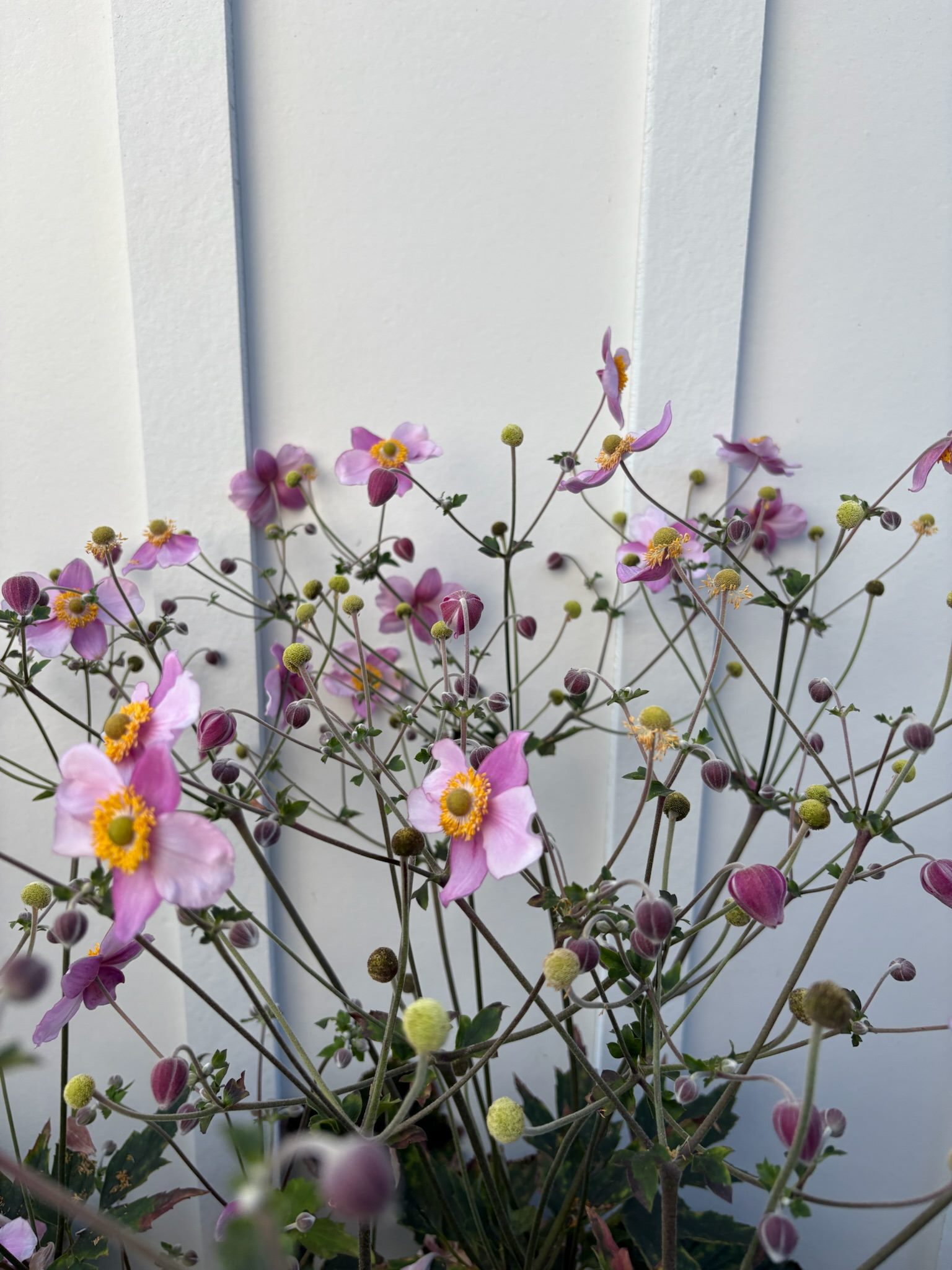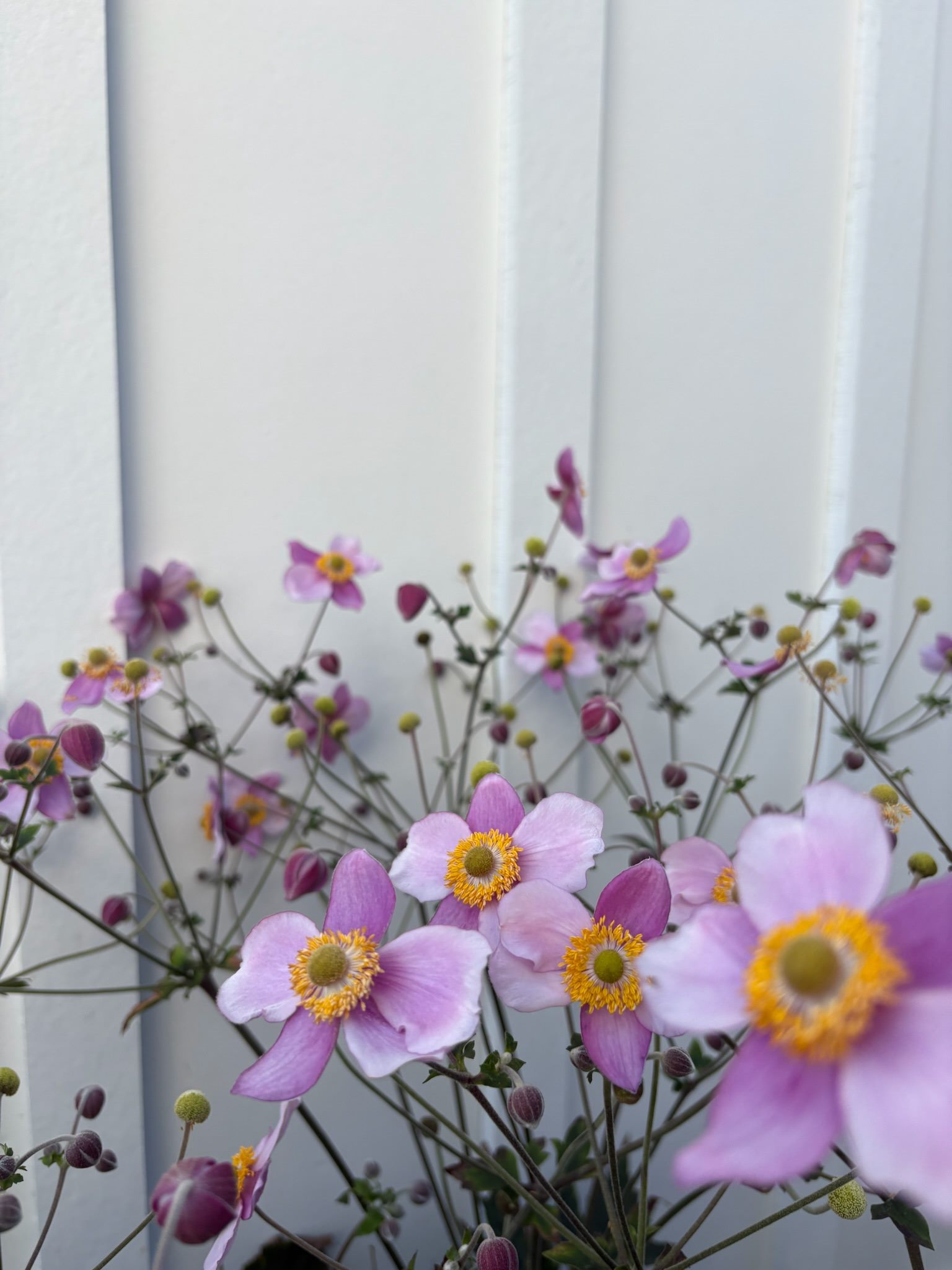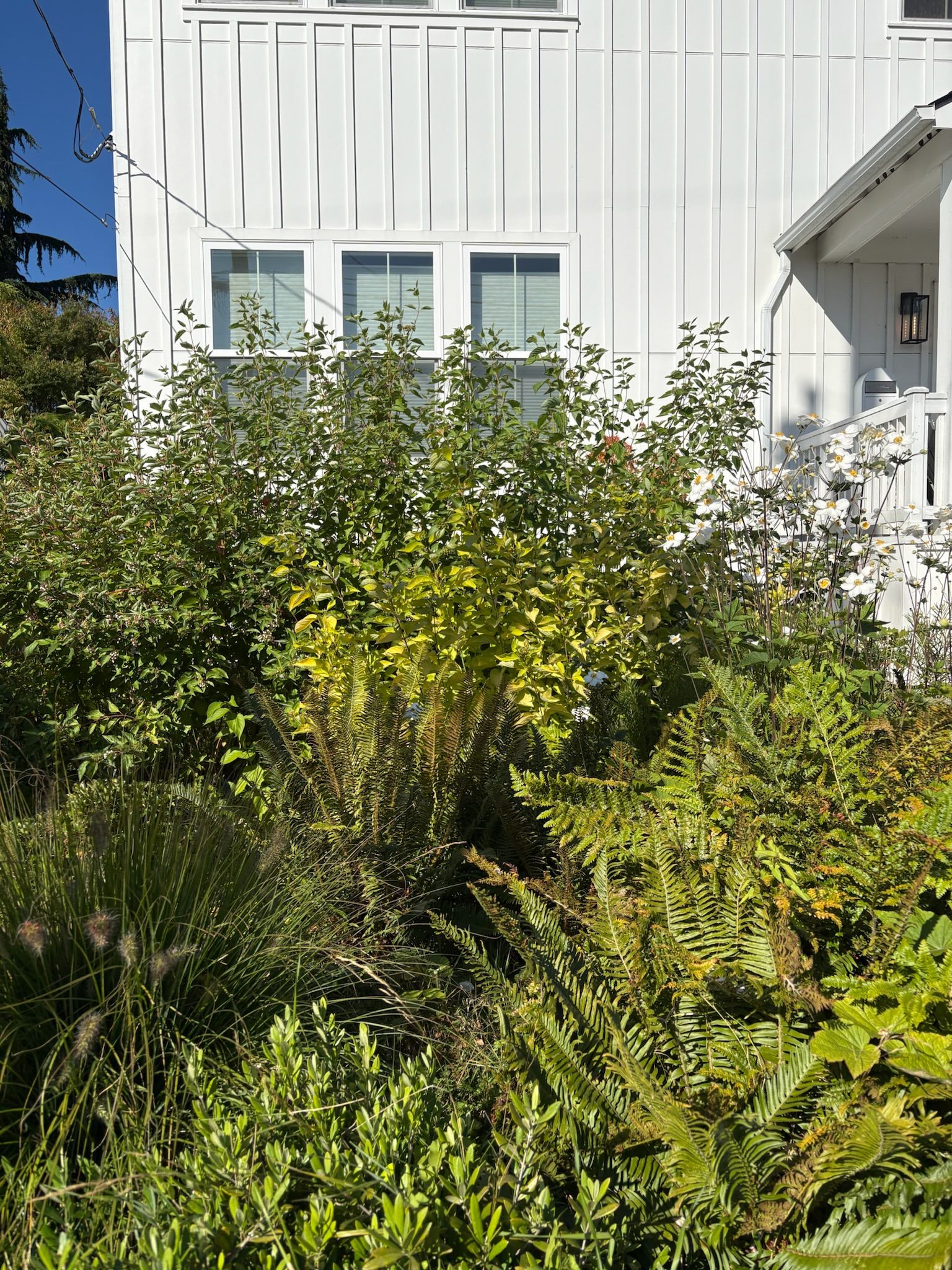
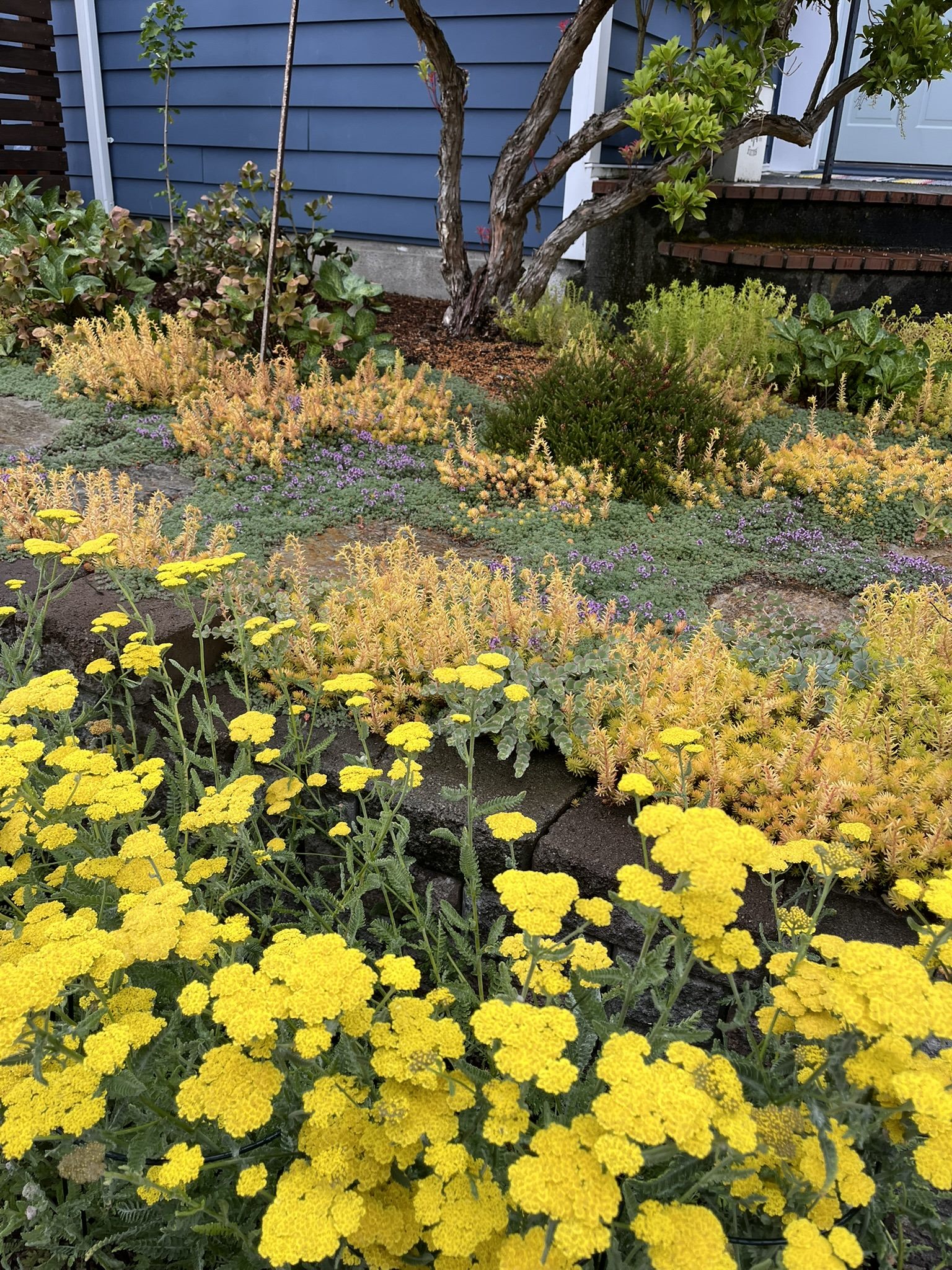
Native plants are having a moment for good reason: they're adapted to our exact rainfall pattern — wet winters, dry summers — which means less supplemental watering once established, and they tend to shrug off the pests and diseases that stress non-native ornamentals. They also support the birds, pollinators, and soil life that evolved alongside them.
The catch is that "native plants" isn't one palette. What thrives in a dry, sunny parking strip is nothing like what thrives under a stand of Douglas fir. Start by being honest about your site's actual exposure, then build from there.
Full sun (6+ hours direct)
Sunny sites in the PNW are often the driest spots in a garden once summer arrives, since our rain all but disappears from July through August. Look for:
- Douglas aster — late-summer purple bloom, good for pollinators when little else is flowering.
- Yarrow (Achillea millefolium) — tough, drought-tolerant, flat flower clusters that read well in a modern planting scheme.
- Oregon sunshine (Eriophyllum lanatum) — silvery foliage, bright yellow flowers, thrives in lean, well-drained soil.
- Red flowering currant (Ribes sanguineum) — an early-spring shrub that hummingbirds rely on right as they return.
Part sun / part shade (3–6 hours)
This is the most common exposure in a typical Seattle yard, especially with fences, mature trees, or a house shading part of the lot for half the day.
- Pacific ninebark (Physocarpus capitatus) — fast-growing structural shrub, clusters of white spring flowers.
- Oceanspray (Holodiscus discolor) — arching sprays of cream flowers in early summer, tolerant of a wide range of conditions.
- Camas (Camassia quamash) — a spring-blooming bulb once a staple food source for Coast Salish peoples, striking in drifts.
- Western sword fern (Polystichum munitum) — reliable evergreen structure that anchors a bed through winter.
Full shade
Under mature conifers or on the north side of a house, most non-native ornamentals struggle. Natives that evolved in our forest understory do not.
- Salal (Gaultheria shallon) — dense, glossy-leaved groundcover shrub, the backbone of most PNW forest understories.
- Deer fern (Blechnum spicant) — smaller and more refined than sword fern, good for tighter spaces.
- Vanilla leaf (Achlys triphylla) — a low, spreading groundcover with distinctive three-part leaves.
- Red huckleberry (Vaccinium parvifolium) — often found growing right out of old stumps in the wild; edible berries, airy structure.
Wet or poorly drained spots
If you've got a low corner that stays soggy through winter, work with it instead of fighting it with drainage work.
- Red-twig dogwood (Cornus sericea) — brilliant red winter stems, tolerates standing water.
- Slough sedge (Carex obnupta) — grass-like structure for a rain garden or wet meadow look.
- Western red cedar (Thuja plicata) — if you have room for a large tree, nothing says "Pacific Northwest" more clearly, and it thrives in moist soil.
Rain gardens: function first, beauty second
If your yard has a downspout or runoff problem, a native-planted rain garden solves drainage and looks good doing it — sedges, rushes, and red-twig dogwood are common anchor plants. It's worth designing as its own zone rather than an afterthought.
A note on straight species vs. cultivars
You'll often see "nativar" cultivars (bred selections of native species) at nurseries — bred for compact size or bloom color. They're usually fine for a residential garden, but if supporting pollinators and wildlife is a priority, straight native species tend to have more reliable value, since breeding can sometimes reduce nectar production or alter bloom timing.
Next steps
Once you know your exposure and have a short list, the next question is usually structure: what stays green in January. Our guide on decking materials for a wet climate covers the hardscape side, or if you'd rather have a professional build the planting plan, browse design-build firms in the directory.