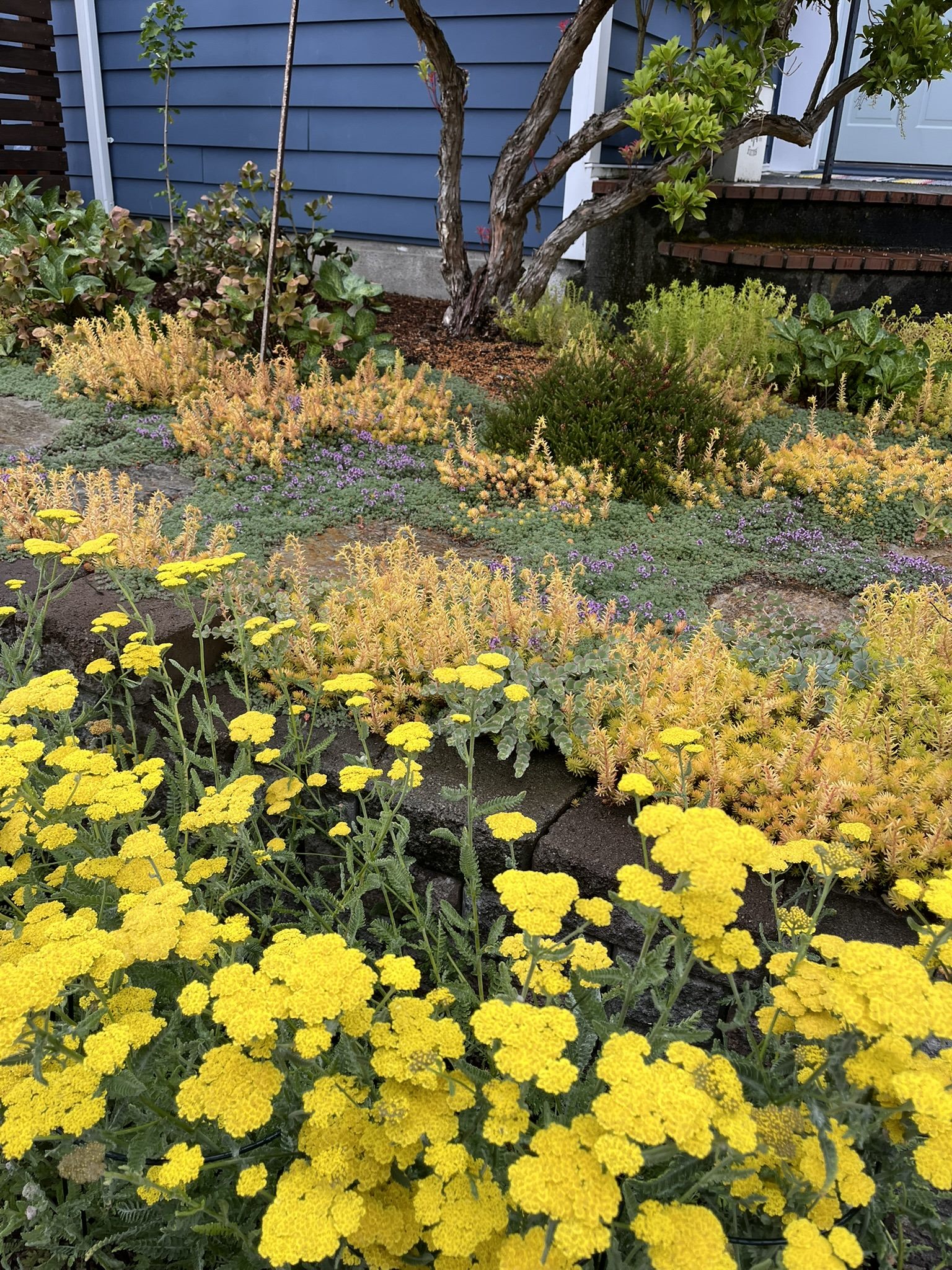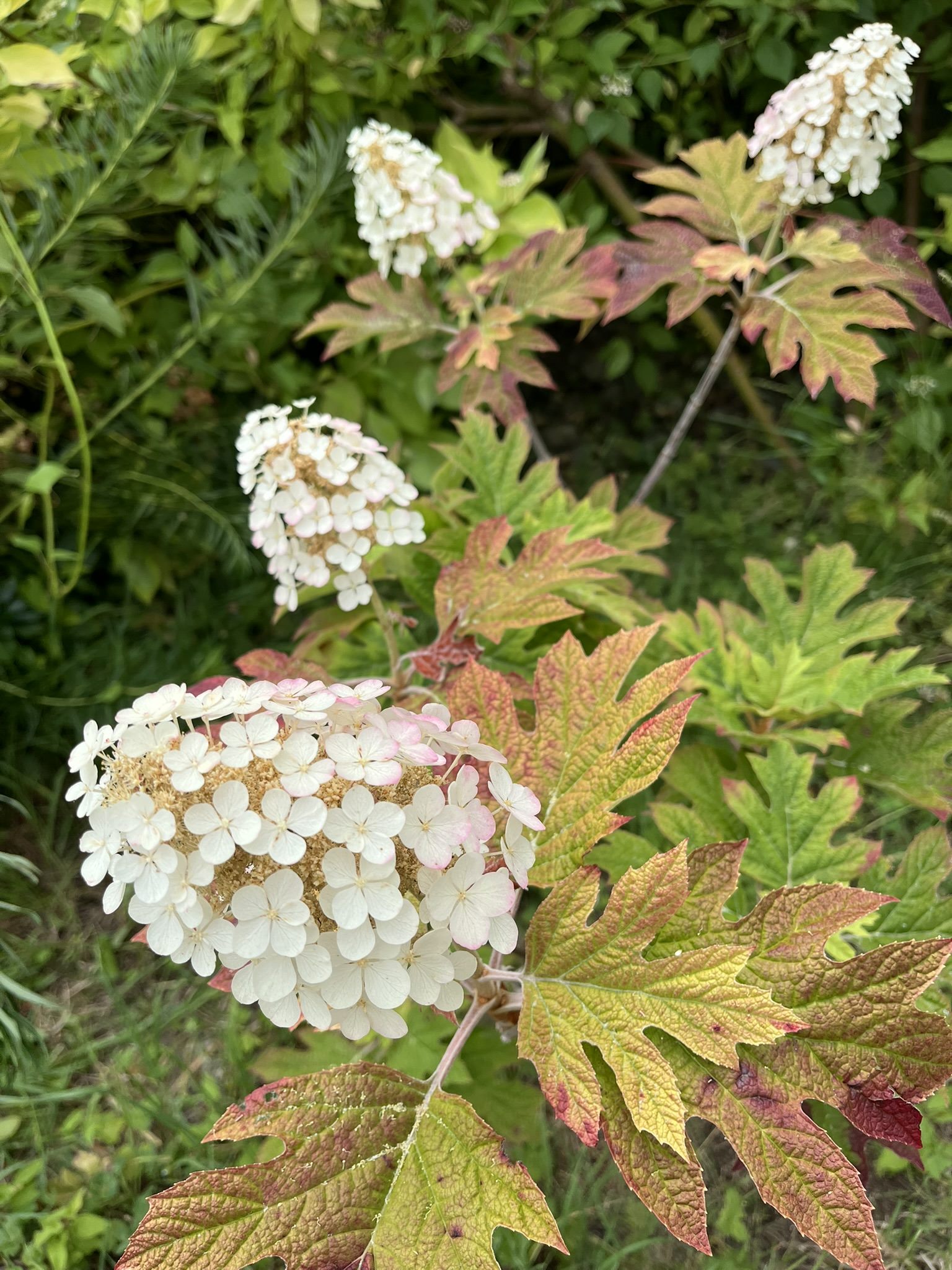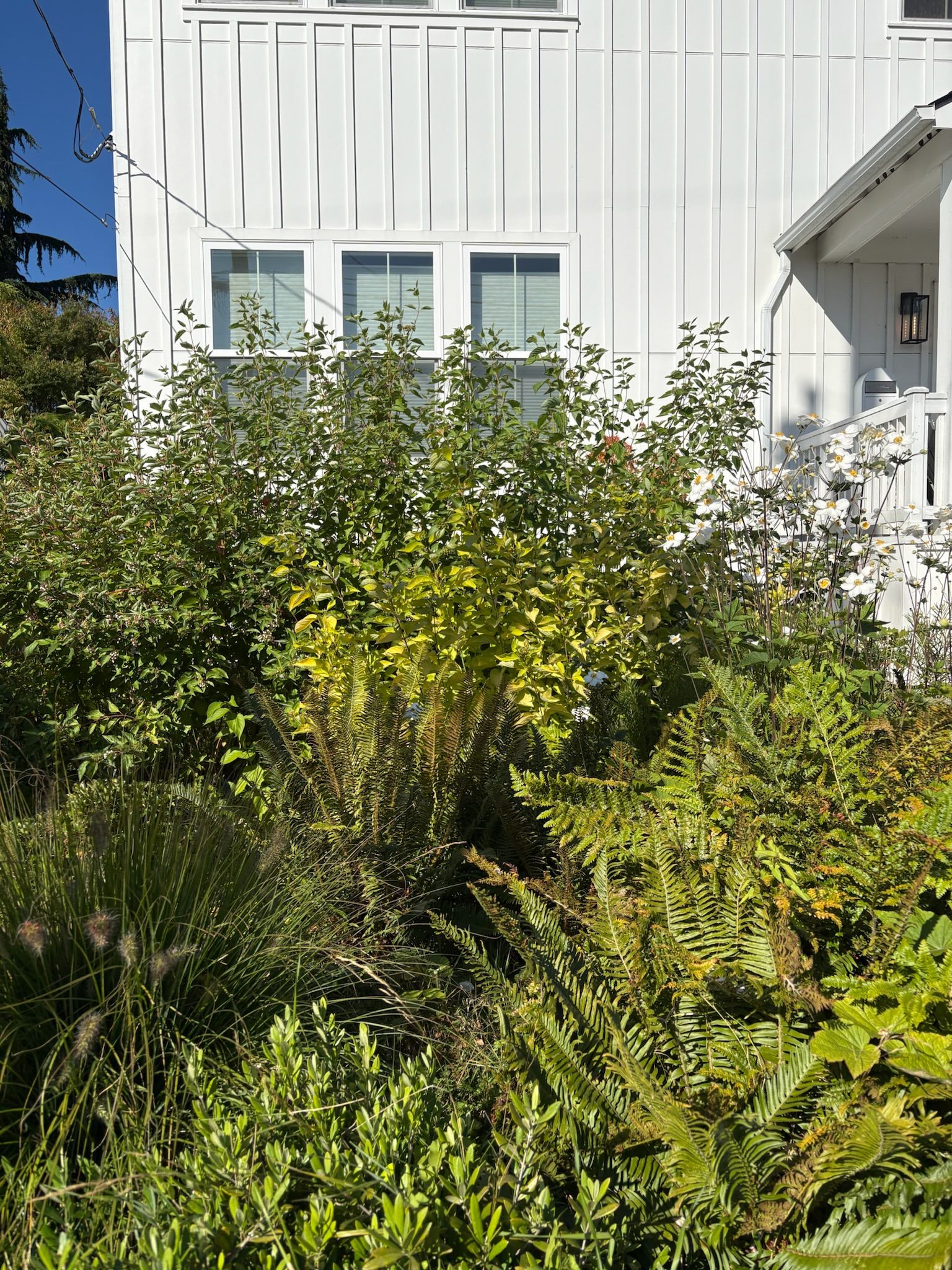
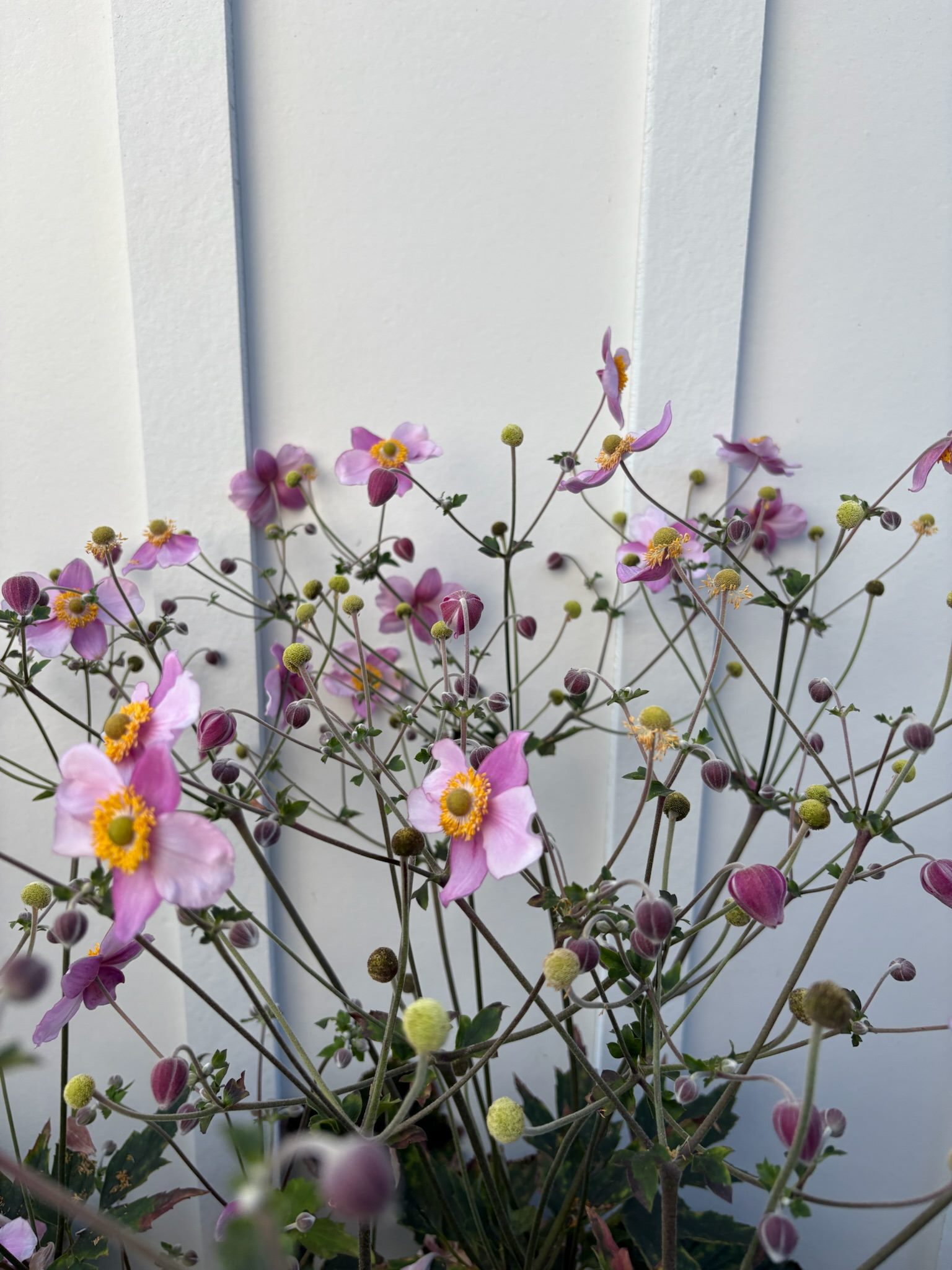
Fall cleanup in the Pacific Northwest is less about tidying everything into a blank slate and more about triage: what actually needs cutting back now, and what's better left standing through winter. Get the timing and priorities right and you'll save yourself work in spring while giving wildlife a place to overwinter.
Do now (October–November)
- Cut back and compost diseased foliage — especially anything with powdery mildew, black spot, or rust. Leaving diseased material in the bed lets it overwinter and re-infect next season.
- Clear leaves off lawns and low groundcovers before they mat down in our wet fall weather and smother the grass or plants underneath. A thin layer on planting beds is fine and beneficial — see below.
- Clean and store summer irrigation equipment if you haven't already, and drain any exposed hose bibs before the first hard freeze.
- Divide overcrowded perennials while the soil is still workable and roots have time to establish before winter dormancy.
- Plant spring bulbs — daffodils, camas, and other spring bloomers go in now for a payoff in March and April.
- Clean and sharpen tools before storing them for winter; a quick oil wipe-down prevents rust through our damp months.
Leave standing through winter
This is the part that trips up gardeners used to a tidier, more manicured fall routine — but in the PNW, a "messier" fall cleanup is genuinely better practice.
- Seed heads on perennials like coneflower and rudbeckia feed birds through winter and add structure to an otherwise bare garden.
- Hollow-stemmed plants provide overwintering habitat for native bees. Cutting everything to the ground removes this habitat entirely.
- A layer of fallen leaves on planting beds acts as free mulch — insulating roots and breaking down into organic matter by spring. Shred them first with a mower pass if you want them to break down faster.
- Ornamental grasses generally look better left standing through winter and cut back in early spring instead, before new growth emerges.
Why timing matters here specifically
Our mild, wet winters mean plant material doesn't freeze-dry and break down the way it might in a harsher climate — it just sits wet, which is exactly the condition fungal diseases prefer. That's why disease-prone material should come out now, while genuinely dormant, structural material is fine to leave.
Prep for the first hard weather
- Move or protect containers that could crack if water freezes inside them.
- Wrap or relocate borderline-hardy young plants that haven't been through a full PNW winter yet.
- Check that drainage paths (French drains, downspout extensions) are clear before the heaviest winter rains arrive.
Next steps
Once the first storms roll through, our winter storm prep guide covers protecting decks, furniture, and young plantings specifically. If seasonal maintenance isn't something you want to manage yourself, browse maintenance & care firms in the directory — many offer seasonal cleanup as a standalone service even if you're not a year-round client.